

Introduction
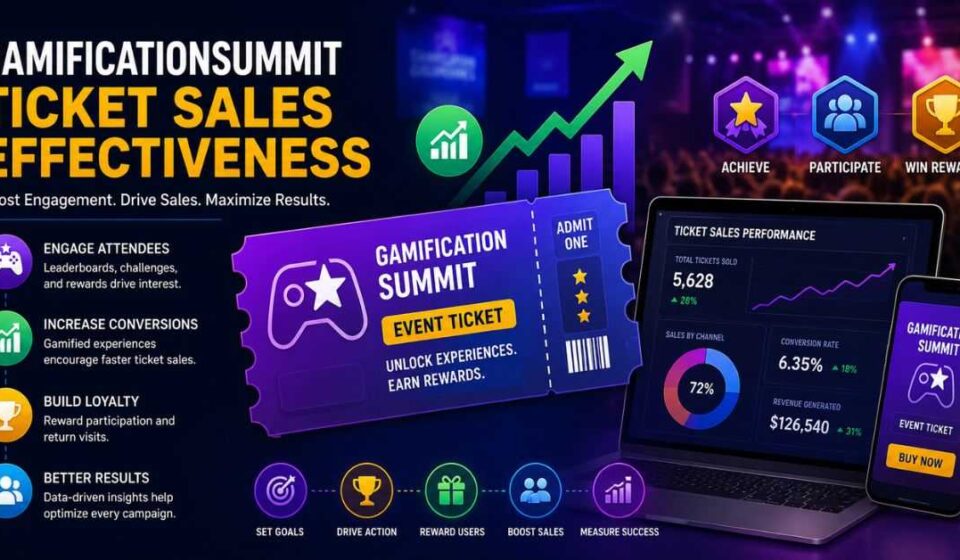
Selling tickets to a conference sounds simple until you actually try to do it. You need the right price, the right message, and the right timing, or seats stay empty. For gamification-focused events, earning trust is especially important because the audience often recognizes common persuasion and marketing tactics. That is why GamificationSummit ticket sales effectiveness has become such an important topic for event planners, marketers, and even attendees who just want a fair deal.
This guide breaks everything down in plain words: what drives strong ticket sales, which pricing tricks work, which mistakes waste money, and how technology is changing the game in 2026, backed by real market data instead of guesswork. Whether you are running a summit or just deciding if a ticket is worth the money, you will get a clear, honest picture here.
What GamificationSummit Ticket Sales Effectiveness
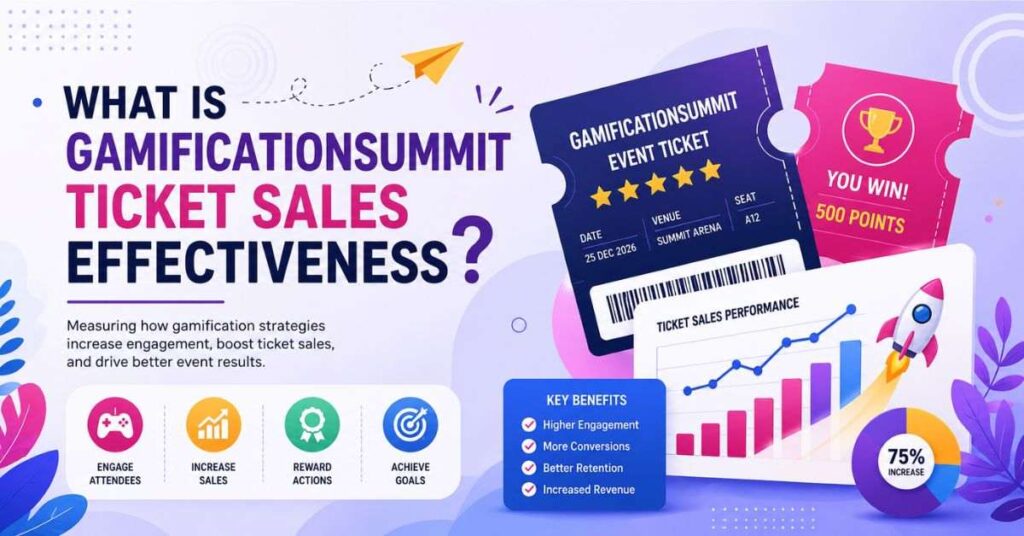
When people talk about GamificationSummit ticket sales effectiveness, they mean how well an event turns interest into paid, confirmed seats. It is not just about how many tickets get sold, but also how fast they sell, how much it costs to sell them, and whether buyers feel good about the purchase afterward.
A summit can have a huge social media following and still sell tickets poorly if the checkout page is confusing or the price feels unfair. A smaller event with a clear message and easy buying process can sell out weeks in advance instead. Effectiveness is really a mix of three things: reach, conversion, and retention — how many people see the offer, how many buy, and how many come back next year.
Think of it like a funnel. Thousands see an ad, some click through to the ticket page, and only a portion actually complete the purchase. Each stage can leak potential attendees if it is not designed well, so good organizers study every stage instead of only watching the final sales number.
Why This Topic Matters More in 2026
Event ticketing has changed a lot in the last few years. Buyers now expect a smooth, mobile-friendly checkout, transparent pricing, and instant confirmation. Mobile devices already drive well over half of all online event ticket purchases, so a summit still relying on a clunky desktop-only checkout page is losing sales without realizing it.
At the same time, the wider gamification industry has grown fast, which means more competition for attendee attention. The global gamification market reached close to $19.4 billion in 2025 and is expected to keep growing sharply through the decade, bringing more summits, webinars, and choices pulling at the same audience.
This growth is good news and a challenge at the same time. It proves demand is real, but it also means measuring GamificationSummit ticket sales effectiveness matters more than ever, since organizers cannot rely on the topic alone to sell seats. A summit focused on engagement mechanics is judged harder than a typical conference, because the audience notices when the ticketing experience itself feels outdated or manipulative — creating a trust gap before the event even starts.
Key Factors That Drive Strong Ticket Sales
Several factors combine to shape how well tickets sell, and skipping even one usually shows up as a drop in conversions later.
- Clear value: Attendees need to know exactly what they get before they pay.
- Trusted brand: Reviews, known speakers, and media mentions build confidence fast.
- Simple checkout: Fewer clicks and form fields mean fewer abandoned carts.
- Fair pricing: Buyers compare prices across similar events, so pricing must feel justified.
- Honest urgency: Real limited-time discounts work; fake countdown timers destroy trust.
- Mobile readiness: A checkout that works badly on a phone loses many modern buyers.
Small details matter too. A slow-loading page, a missing payment method, or a confusing refund policy can each quietly push a buyer away. This is a core reason why GamificationSummit ticket sales effectiveness depends on treating the buying journey as part of the event experience, not just an administrative step tacked on at the end.
Visual Snapshot: Ticket Tiers and What They Include
Most gamification-focused summits sell more than one ticket type. Here is a typical structure used across many 2026 events.
| Ticket Tier | Typical Price Range | What’s Usually Included |
|---|---|---|
| Early Bird | Lowest price | Full sessions, workshops, digital materials |
| Standard | Mid-range price | Full sessions, workshops, networking access |
| VIP / Premium | Highest price | Everything above, plus private expert sessions and priority seating |
| Group / Team | Discounted per person | Multiple standard passes bought together |
This second table shows how buying timing usually affects price and demand.
| Purchase Window | Price Behavior | Buyer Motivation |
|---|---|---|
| 3+ months before event | Lowest available price | Budget planning, guaranteed seat |
| 1–2 months before | Price increases moderately | Confirmed schedule, less risk |
| Final 2 weeks | Highest price, limited stock | Urgency, fear of missing out |
| Walk-in / last minute | Premium or sold out | Spontaneous decision, availability risk |
These patterns are common across the events industry, and understanding them helps both buyers and planners make smarter decisions.
Pricing Strategies That Actually Work
Pricing is one of the biggest levers in ticket sales. Research on consumer behavior shows people rarely decide in isolation — they compare options side by side, which is why smart pricing usually includes two or three tiers with a middle option that looks like the best deal.
Early-bird pricing remains one of the most reliable tools. It rewards decisive buyers with a lower cost and gives organizers early cash flow and early proof of demand. Anchoring is another proven method: showing a higher-priced VIP ticket next to a standard one makes the standard price feel more reasonable by comparison. Bundle pricing also works well for teams — a small discount for groups of three or more increases tickets sold per transaction. Just avoid offering too many tiers, since extra choices can confuse buyers and stall the decision entirely.
Transparency matters just as much as the number itself. Hidden fees that appear only at checkout are one of the fastest ways to lose a sale, and regulators have flagged this exact problem across the ticketing industry in recent years. Showing the full price — including any processing fee — from the first screen builds trust and reduces cart abandonment.
Marketing Channels and the Best Timing to Promote
Even the best-priced ticket will not sell itself. Email newsletters remain one of the strongest channels, since subscribers already trust the sender and often get early discount codes first. Social media builds awareness early on, while retargeting ads (showing an ad again to someone who already visited the ticket page) convert well closer to the event date. Referral programs work especially well here, since this audience already responds naturally to points and sharing rewards.
A three-phase approach tends to work best:
- Awareness (3+ months out): Announce speakers and early-bird pricing.
- Consideration (1–2 months out): Share testimonials and session previews.
- Urgency (final weeks): Highlight seat scarcity and last-chance discounts.
Matching promotions to natural buying behavior, instead of pushing constant discounts, keeps the brand looking confident rather than desperate.
Common Mistakes That Hurt Ticket Sales
Even well-planned summits lose sales through avoidable mistakes.
- Overcomplicated checkout: Too many fields before payment increases drop-off.
- Unclear refund policy: Buyers hesitate without a simple cancellation answer.
- Ignoring mobile users: A desktop-only design turns away many buyers.
- Fake urgency: Resetting timers or false “limited seats” claims damage trust.
- Weak follow-up: Skipping emails to unfinished checkouts wastes recoverable sales.
- Pricing by guesswork: Setting price without checking what similar events charge.
A recurring theme behind poor GamificationSummit ticket sales effectiveness is treating the ticket page as an afterthought instead of a core part of the marketing funnel. Fixing even two or three of these mistakes often produces a noticeable lift in completed purchases within a single sales cycle.
How Technology and AI Are Changing Ticket Sales in 2026

Technology keeps reshaping how tickets get sold. In 2026, AI increasingly personalizes the buying experience, showing different messaging or offers based on a visitor’s browsing behavior. Chatbots now answer common ticket questions instantly, cutting the number of buyers who leave simply because they could not find an answer fast enough. Dynamic pricing, long used in airlines and hotels, is spreading into conferences too, adjusting prices slightly based on real-time demand.
Digital wallets and one-tap mobile checkout have become standard expectations, and some pages now even offer augmented reality venue previews. None of this replaces the basics, though — a confusing or unfair-feeling page will still underperform no matter how much technology sits on top of it.
Real Lessons from Successful Events
A few patterns show up again and again in campaigns that performed well. Referral promotions that reward attendees for bringing colleagues have driven meaningful attendance gains without heavy extra ad spend, and events that showed the full ticket cost upfront reported lower cart abandonment than those adding fees at the last screen.
Honesty in messaging is another consistent lesson. Summits that clearly explained what each tier included, instead of vague marketing language, reported fewer refund requests and higher satisfaction afterward—which matters long-term, since happy attendees return next year and recommend the event to others.
A Simple 2026 Checklist for Better Results
Use this checklist before your next sales push:
- Confirm the ticket page loads fast and works well on mobile.
- Show the total price, including fees, from the first screen.
- Offer no more than three or four ticket tiers.
- Set an early-bird deadline and honor it.
- Follow up with anyone who starts but does not finish checkout.
- Add a simple referral reward for existing ticket holders.
- Review last year’s data to see where buyers dropped off.
Following steps like these consistently improves overall GamificationSummit ticket sales effectiveness because they remove friction at every stage of the funnel instead of only fixing one weak point. Small, steady improvements across the whole journey tend to beat one big, dramatic change made right before the event.
Frequently Asked Questions
What is the best time to buy a gamification summit ticket?
Buying during the early-bird window, usually two to three months before the event, almost always gives the lowest price.
Do VIP tickets really offer better value?
Sometimes, if you want direct access to experts, but the standard tier is usually enough for general learning.
Why do some ticket pages feel untrustworthy?
Hidden fees, fake countdowns, and vague refund policies are the most common reasons buyers lose trust quickly.
Does mobile checkout really affect sales that much?
Yes, since a large majority of ticket buyers now browse and pay using their phones instead of a desktop computer.
Can referral programs actually boost attendance?
Yes, well-designed referral rewards have driven noticeable attendance increases for several real events without large extra ad spend.
Conclusion:
Selling out a summit is not about luck or a flashy landing page alone. It comes down to clear value, fair and transparent pricing, a smooth mobile-friendly checkout, and honest promotion timing. Buyers reward simplicity and punish hidden tricks, whether that shows up as an abandoned cart today or a quiet decision to never return next year.
Improving GamificationSummit ticket sales effectiveness is really about respecting the buyer’s time and intelligence at every single step, from the first ad they see to the confirmation email in their inbox. Small fixes—a faster checkout, an honest early-bird deadline, a simple referral reward—add up to real, measurable gains over a full sales cycle.
If you are planning your next summit, start with the checklist above and test one change at a time. If you are deciding whether to buy a ticket, use this guide to compare tiers and timing before you commit. Either way, informed decisions beat guesswork.